
Interview with Peach
Only love for this wild British group

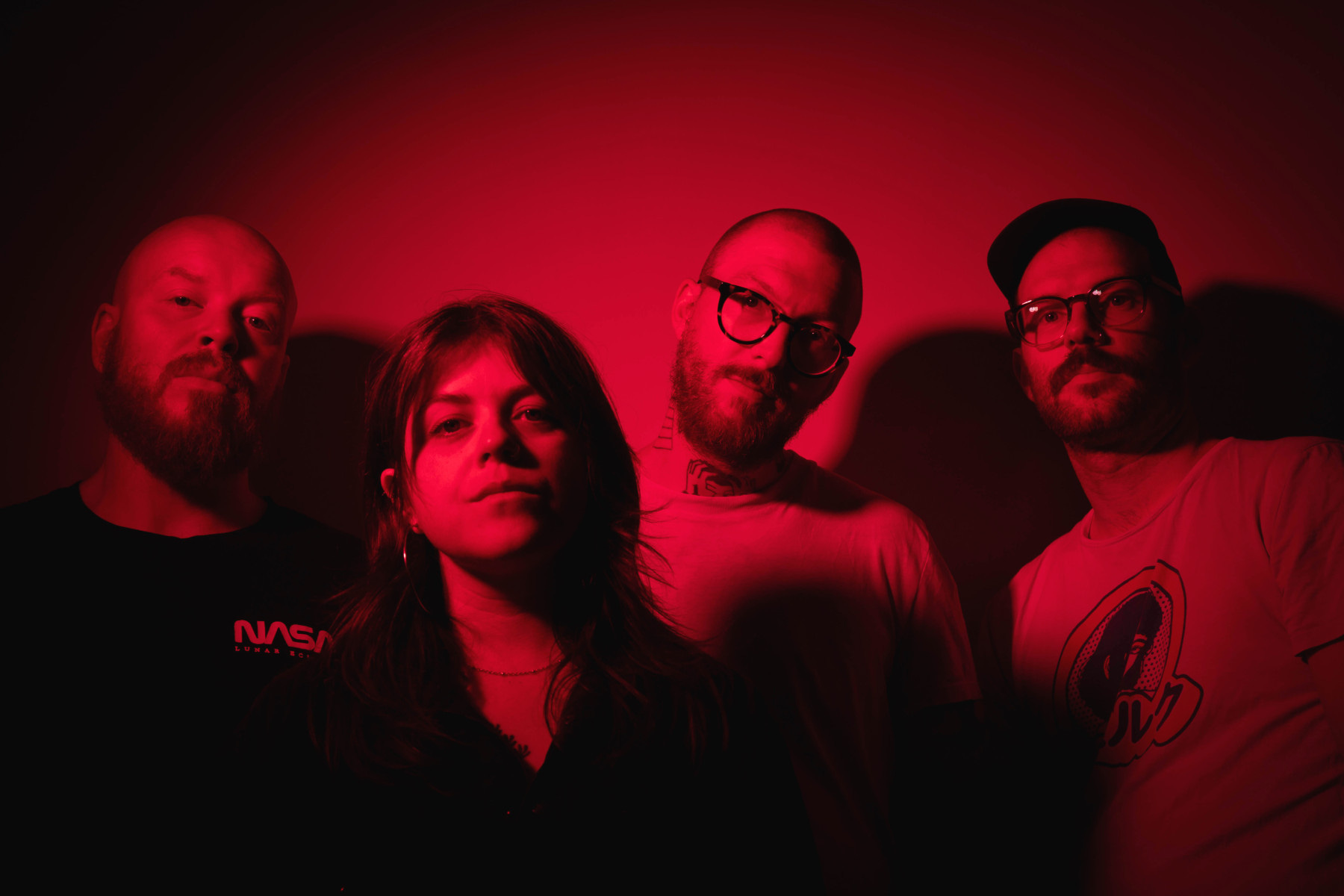
Pic by Laura Jones
When choosing people to interview I often want to find those whose art and creativity surprise me; they put forth something I believe in but am still curious about. And typically there is some connecting bond- we know each other already, at least familiar in passing, or perhaps we have a mutual connection, a bridge of some kind that makes conversation come about a little easier. A bit more natural. It’s pretty rare that I blindly reach out to artists with no idea of how it will go, but such is the case with Bristol, UK’s Peach. All I know is I heard their music, was immediately grabbed by it, and wanted to get the word out about what they do. Because I can guarantee probably next to no one reading this in the U.S. has heard, or heard of, them. But they’re about to release their second LP so it felt like as good a time as any to talk with them.
This wasn’t an effort to get into a deep conversation, or become vulnerable with one another, like some of the interviews I’ve done. This was to get an idea of what this band is, and for you to listen to them. It’s intentionally kind of basic in many respects. So with that I stayed up very late at night to connect with vocalist Ellie Godwin and drummer Andy Sutor for whom it was quite early the next day where they are.
As I understand it the band was kind of a band, with just a couple of the members and then Ellie, you joined a couple years later?
ANDY: Essentially, me and JP, the guitarist, started the band. We worked together at the time and we were talking about how we played in lots of different bands but we didn’t really have anything that was sort of grunge-y heavy, or a lot of music that we liked to listen to. So we started meeting up and jamming riffs and ideas, and then Tim, who was our previous baritone guitar player, he worked at the same place as us and we brought him in. So we formed as a thing, gave it a name, and this was 2019. It was just before the pandemic kicked in, so during that time we thought we’d just keep making demos, and make a plan.
We were thinking about one of us doing vocals, or sharing vocals, and we figured out that was a terrible idea. So we were looking around. But I had met Ellie years before and knew her from her other band No Violet. I was a big fan. So I reached out and I sent her a voice memo of one of the tunes from the first album and you were keen.
ELLIE: Locked in. Andy just messaged me at a really good time because it was during the pandemic, and my creativity just went ‘bleph’ (makes collapsing sound). But then I just hear this really cool song, it was already there, ya know?
So I take it you didn’t play any shows prior during those couple years as just a duo or anything?
A: It was literally at the tail end of 2019 that we started meeting up.
Good timing.
A: Right. So our first gig as a band was November 2021, I think.
E: It was a festival.
A: There’s a couple festivals that happen close to Bristol, where we live. There’s Arctangent and 2000 Trees and they’re run by some of the same people. So they did a little warm up gig in Bristol called 80 Trees, and they took a chance on us because they knew our other bands. So we played our first gig, which was basically our first album as our set because it’s what we had. And then the next February we went into the studio and recorded it as it was. And that was the first album. So we did one gig and then recorded an album. So I guess we’re a band now! (laughs)
And when you recorded it was completely live, right?
A: Pretty much. There were some overdubs. The first album in particular was incredibly minimal. The first day we went in and got the sounds we wanted. When we were in the control room I was thinking that this sounds done already. It was incredible working that way, in analog, and tape. You have to commit fully to the recording.
So we did two runs of all the songs and we just picked our favorites out of the two. I think about 80% of it was the second run through we did in the evening. The producer set us up in the room as if it were a gig, with moody lighting and filming it, so the adrenaline sort of kicked in.
E: There was tension.
A: There were a couple takes from the morning that were good, but that was pretty much the record. And we had two more days to have fun with it. You kind of mix as you go with tape. We were playing around with analog effects, like space echo units and stuff.
E: We did some backing vocals, more space-echo-y stuff. Very minimal.
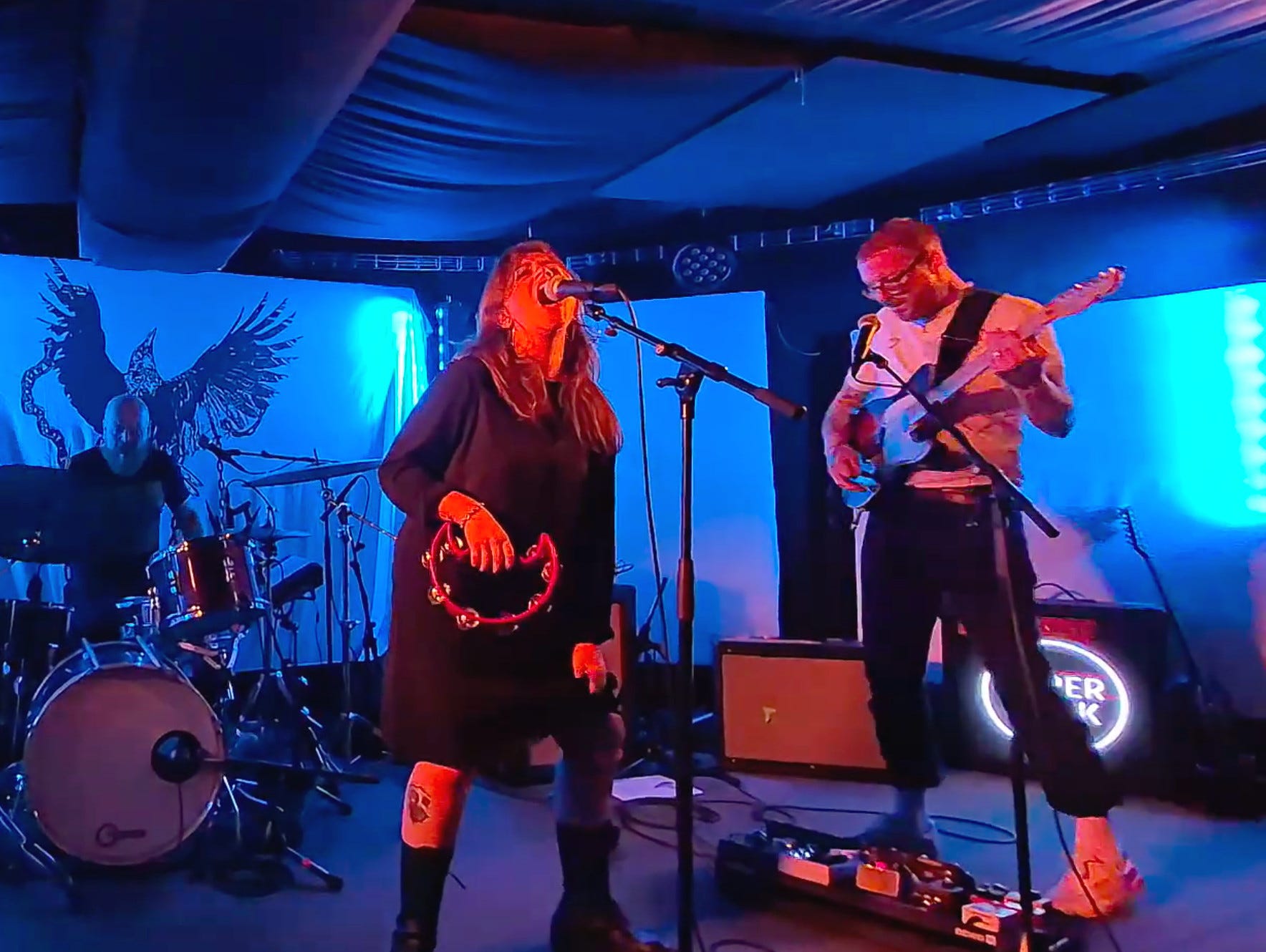
You could really go for the live feel by having people throw beer cans at you, or make the room really smell like a dumpy venue.
E: The producer would be telling me stuff like, ‘be weirder!’ He would ask me to do weird shrieks, or a weird version of the vocal and mess with it. He really brought the weird out. He would say, ‘c’mon, more!’ (yells)
A good producer will encourage you to do all that stuff because then that’s where the magic happens. It doesn’t always work, but it’s often pretty great.
But that record does sound really fully-formed. It sounds like people who have been playing together for a long time. It doesn’t sound ‘live’, it sounds quite good. What about the idea of not having a bass on that album, instead having a baritone guitar?
A: It’s one of those classic kids getting together in a garage and who wants to play what sort of thing. JP was already on guitar and Tim (former baritone guitar player) was a guitar player. He didn’t want to play bass, but he had to play bass. So the compromise was that he would play baritone. We worked at a music university and there was a baritone on the wall. We were rehearsing there and we just tried it out with some effects to beef it out and it made a pretty cool sound. So it became synonymous with that first album. It started out as a bit of a compromise, but it became a feature.
But now with Mike, our new member, we have bass. And it has made a huge difference. People are really noticing it at our shows.
I think having baritone guitar has become a bit more common in the last few years, especially with two-piece bands so they can get both the higher and lower sounds. The first time I heard it was when I heard The Evens. But you all made it work pretty well too as a full band.
So speaking to that recording style, now that you are on LP number two did you go in there with a different approach to recording, or were you still in the mind of ‘let’s do it live’? Some of the sounds I’ve heard on Ellie’s vocals from the singles out there definitely make it seem like you’re trying a bunch of different stuff.
E: We went into the studio a couple times prior to recording the new album just to try out some ideas with Pete (Miles, studio engineer). Some of them didn’t stick, some of them did. He set up a kit outside, which was different. Most of the studio is kind of in a barn, like a refurbished barn. There’s lots of high walls. So he stuck Andy outside with a microphone outside the window. It sounds cool, but it was pretty intense!
A: There’s a lot of natural slap back that was really interesting. But it was so arduous! The summer heat was rough. It was not great.
E: So we scraped that idea. So we tried out different styles of recording, mostly with the drums.
A: But we inevitably sort of fell back on the way we recorded the first album in the sense that the bulk of the recording was us running the tune live to tape. Actually, one difference this time was that this was even more analog than last time because we completely bypassed the computer until the very end. So we recorded straight to the desk, or tape machine, mixing, then bouncing out to another tape machine, and only when the record was done was it transferred into Logic, or whatever, and turned into a digital version.
We did allow ourselves more freedom and time to do additional overdubs, production style things. Essentially, when you listen to the first album it’s the same sound every track because it’s the sound of the room that we’re in and the fact that we ran it pretty much like a gig. Where as on this one we wanted to put a bit more character into each tune, and slightly adjust the drum sound, the guitar sound, the vocal sound; use of effects or not. In fact, most of the record is incredibly dry. There’s hardly any reverbs on a song like “The Nerve”. We purposefully made it really dry because when Ellie does the big vocal break it’s even more jarring because there’s no prettiness to it at all.
E: There’s really no effect on any of the vocals on any of the album. It was a bit nerve-wracking, I felt pretty vulnerable!
A: But using all that old gear you get so much character from the tape saturation, and the particular pre-amps in the studio. But once you got the sound in the room that you want it’s just a matter of capturing it.
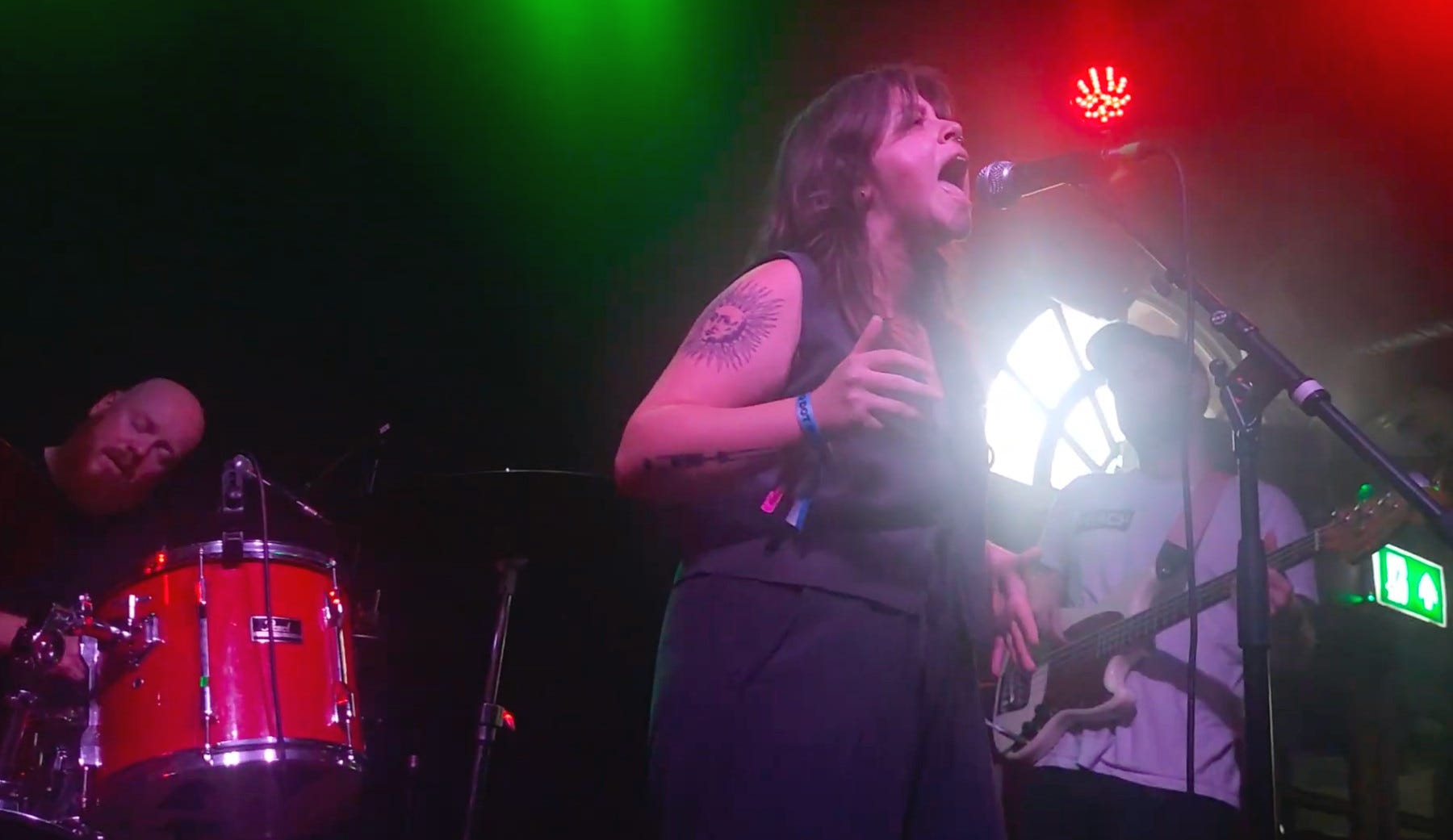
So between the first album, which I imagine was written mostly in isolation, and in fits and spurts between having half a band and a full band. And now the new album “Only Love” with you all on the same page, and a bit more experience of being a band, what do you all see as the big difference between the two?
A: There’s definitely crossover because there are three songs on the new album that we had been gigging live for awhile. Everything else was sort of in bits. We did a lot of gigs to promote the first album. And then we would have writing sessions where we would sort of jam new ideas. We were struggling to finish them a lot of the time though. But in this transition period we did have a change in personnel because Tim left the band. In the interim our friend Mel stepped in to play some shows with us and they were great. They’re actually our preferred sound person when we play shows. But Mel was super busy, teching for other bands. We then landed on our friend Mike, who came in.
It wasn’t until Mike came in where the rest of the tunes started to finalize. “Unhappy People” we wrote in the studio while we were there. I guess the difference is going into record one all the songs were established because we had been working on them for ages. Where as album two was dribs and drabs to the point where one of the songs wasn’t even written until the album was recorded. It felt quite different.
Do you feel that it sounds a lot different?
E: It definitely sounds different because we have friends who came in to sing back ups and gang vocals. We have some brass on there. Well, we had some brass on the last record too.
Oh yeah, on “Settle Down”, right neat the end of the last record! If I can jump backwards just a bit, I wanted to ask what you all wanted to do, initially, with the band? I suppose this applies to you Andy since you were part of starting the band. But also Ellie, since you came in later maybe you had an idea of where you wanted to go with it as well?
A: We always sort of fall back on the same early reference points because they keep popping out when we’re writing songs. Me and JP initially wanted to show our love of Queens Of the Stone Age, and desert rock stuff. The “Desert Sessions” albums were great. Lots of our favorite musicians were involved in that, including PJ Harvey. And that was sort of a bridge between me and Ellie because we both love PJ Harvey. We also both love that sort of early grunge vibe as well. So it went from being this sort of desert rock, riffy, groove-based thing to…. I don’t know, Peach. Ellie basically gave it the character that made it a thing that has it’s own identity.
E: It was very inspiring what I heard initially. It brings out a weirdness in me. I guess, bringing out the PJ Harvey reference did help keep the weirdness afloat. Maybe some of these Bjork vibes as well.
A: We have the reference points in our minds, but I do feel that very quickly once Ellie put down some vocal parts to some of the things we had written you’re no longer trying to mimic anymore. You’re just doing your thing. And it wasn’t until we went into the studio the first time where we actually heard Ellie’s vocals in full force. Before that we had been in a rehearsal room and it’s very loud and smashy, and we’d get a rough idea of what Ellie was doing, and we trusted her judgment on stuff and we were happy with it.
Once we heard “Settle Down” in the studio me and JP were in the control room just crying. We couldn’t believe what we had landed on really. So I think, by that point, you still have these things in the back of your mind, like ‘this sounds a bit like Queens Of the Stone Age’, or whatever. But we’re not thinking about it like that much anymore because it sounds like us.
E: You all give me a very comfortable platform, and room in music to let me just go all over the place. It’s very respectful.
Your other band, No Violet, sounds quite different. It still sounds like you, but it sounds like a pretty different type of band.
E: I think it’s because I have that freedom from guitar. In No Violet I’m singing and playing guitar. So in Peach I’m a bit more vulnerable because I’m just singing. It’s like, ‘what do I do with my bands?!’ (laughs)
So there’s even more tension and vulnerability. It brings that out more and I can concentrate more on vocals.
I’m always a big fan of regionality and how a place affects the music a band makes. What would you say about Bristol, if it’s welcoming, what your scene is like and how you find your place in it. Or is it a largely varied scene with all sorts of different music and scenes?
A: It’s a bit of all of that. I’m from Bristol originally. It’s always had a good mix of music. It’s a big-ish city, but small enough where everybody knows each other. There’s an incredible network of musicians around. And anything that you’re into you can find a particular venue, or pub, that you gravitate towards and find your home. And for rock and alternative weird experimental sort of stuff it’s always been amazing.
Ellie is from Wales, JP is from Birmingham, our original member Tim is from Stoke. They had all moved to Bristol over time and fed into that music scene. Like I said, a couple local festivals from nearby, when you go to those there’s just so many people from Bristol representing that world. So for me, personally, I feel like it’s always been a big influence. I feel like I wouldn’t have had the same musical journey had I not grown up in Bristol.
E: I haven’t left Bristol. I moved here just over a decade ago. I just loved the music scene. I’ve made so many friends. Everyone respects each other’s space, everyone is in each other’s bands, there’s a great community. I love it.
I wanted to talk about some of the videos you’ve made because they’re awesome in this funny, but ‘am I supposed to be laughing at this?’ sort of way. They often seem kind of serious, but funny as well.
E: Good. That’s a good reaction.
I think one of the best ones is in the video for “I’m Scared” when you’re greeting the people in masks in the woods with these weird shrugs, or gestures.
A: The first three singles had videos that were all directed by Lee Kiernan from Idles and his partner Charlotte Gosch, who is an incredible artist and does our artwork. Both of them run a film production company called Holding Hands With Horses. A lot of the time they will hear a track and create a mood board sort of situation and then pitch it to us and I’m usually like, ‘I have no idea how this is going to work, but let’s just go for it’.
That one, for “I’m Scared” was the most involved and intense video. We had all these costumes that made up this sort of pagan vibe. It was the height of summer, outside for two days, and it was boiling hot. We had maybe ten to twelve extras, just friends of ours, and managing all of them while people wanted to crack open a few beers. But all the weird movements and stuff were very organic. Lee would have this scene in mind, like ‘this is where you greet the people and they invite you in, so let’s just do some hand signals.’ And Charlotte would tell us us to do something and I have this bit where I drag my hand across my face as a greeting and you just kind of go with it and don’t overthink it. So when they spliced it together at the end it looked great.
In terms of the comedy versus seriousness is that the humor is the sort of dark edginess underneath it. It kind of sums us up in general. It’s a bit of what we’re like, really. I don’t know how that relates to lyrics, Ellie?
E: There’s not many lyrics in that song really. The “Bad Touch” video was an interesting one.
A: We had to record that video essentially 13 times with different costumes on and then it was all spliced together.
E: The tough part was getting used to having hands all over you!
A: Another great thing about Bristol is that the community is very right on about checking in. All these people putting hands on Ellie and asking if she was alright. It was definitely uncomfortable! Ellie did very well in that video.
E: I had ketchup and mustard squirted at me. I could smell it in my hair and fingernails for days afterwards! All for the art!
So the new LP is just out. What’s your thoughts on where you’re headed with it, and what’s next?
E: Well, we’re going on tour, a short tour. We would like to get some more tours in as well.
A: We’re very much looking forward to the first show, which is the Bristol launch. A lot of people will do a home show at the end, but I think it would be a nice kick-off to the tour if we do a big Bristol show with all our people there. We’re really looking forward to it. And then we will do a run of gigs. We’re one of those bands where we’re not super into the modern day relentless social media campaigning and that sort of thing. We just want people to hear this record that we’ve made. If they like it, that’s great. If they don’t it doesn’t really matter, we’re going to go out and gig it anyway. We’ll see what comes of it.
How have you found the experience of releasing your records on your own, rather than have other people, or labels, partner up, or assist you with that end?
E: Yeah, we kept thinking about releasing it with a label, or looking into labels. But we didn’t really have that drive so we figured we would just do it ourselves. It felt better to do it like that, I think. It’s a little bit stressful.
A: The first album was a learning curve because it was the first time any of us had really done it. But it was really good for the second album, for ourselves, in terms of making choices. How do we want the release schedule to go? When we did the last album it was really spread out and it was an after effect of the pandemic as well, like ‘how do we do all this again?’ This time around we thought we would just do all our singles really close together, just one a month and then drop the album that same month. Do our launch show the next month and then a run of gigs. And then we’re done with the first leg of promoting this album. To me that just computes so much more in my mind. Here’s a chunk of content, or whatever, people want these days, and then we have a bit of a breather and then do some more gigs later on, and just keep pushing the album.
I feel like having done it the first time we could do this again, just better and smoother. It saves us our mental health a bit more. With the label thing we were sort of looking around and chatting to a few people, and there are some friends in Bristol who have independent labels. But in the end for the sake of relinquishing some of the responsibility I’m not sure if it’s worth it for us at this point. If we do it ourselves then we’re in control of what’s happening.
I think most bands resort to having someone else doing it because they don’t want to dedicate the time it takes to sorting through the details of releasing a record when they could be playing shows, or writing music instead. Or, they’re just broke and can’t afford to press a record.
A: When we get the vinyl we’re like, ‘oh wow, we did it! Here’s a thing we made!’ That’s always quite satisfying really, not having to rely on other people. It makes sense when you’re in that higher echelon, ya know? But when you’re independent, getting a local label involved feels sort of like having extra band members that you have to communicate with, and send emails, and figure out all these details. But if it’s just the four of us and we share the jobs out it works in a weird way.
E: We’ve kind of settled into certain roles, which is quite nice. We pick each other up. We’re a team.